Anavex og CNS
-
Anavex - En reminder om den hidtil mest omfattende analytiker gennemgang af casen.
"Anavex Is Likely To Report Positive Parkinson's Disease Trial Results For A2-73, Increasing Share Value"
Jul. 7, 2020 2:33 PM ET2 citater fra artiklen:
-
The balance of potential effects indicates that A2-73 could have efficacy in Parkinson's and Alzheimer's disease patients. I am predicting an increase in share value with trial results.
-
To leverage the bet, I present strong evidence that A2-73 could improve or maintain cognitive ability in PD and AD patients, signaling that imminent trial results could be favorable.
Udskrift af største del af premium artiklen:
Summary
Anavex Life Sciences is developing drugs for the treatment of Alzheimer's disease, Parkinson's disease, frontotemporal dementia, Rett Syndrome, fragile X, Angelman syndrome, and infantile spasms.
Results from the phase 2 Parkinson's disease trial are imminent; results from the phase 2/3 Rett's and Alzheimer's disease trials are expected in June 2021 and late 2021, respectively.
The sigma-1 and M1-muscarinic receptors are well studied, making their activation effects predictable in healthy brains, but less so in neurodegenerations of unknown etiology.
The balance of potential effects indicates that A2-73 could have efficacy in Parkinson's and Alzheimer's disease patients. I am predicting an increase in share value with trial results.
The combined world market for an Alzheimer's disease ("AD") and Parkinson's disease ("PD") drug is estimated to be 21 billion by 2026 and has a compound annual growth rate of 10%. The fortune from investing early in a blockbuster AD and PD drug lures many wishful prospectors. However, trials for dementia treatments have a dismal record and many investors are reluctant to invest in this sector. To leverage the bet, I present strong evidence that A2-73 could improve or maintain cognitive ability in PD and AD patients, signaling that imminent trial results could be favorable.
Anavex Life Sciences Corp. (NASDAQ:AVXL) is running clinical trials to treat Rett's syndrome (RTT), early AD, PD, and frontotemporal dementia ("FTD"). Results from the double-blind placebo controlled 14-week phase 2 trial treating PD patients with ANAVEX2-73 (A2-73) are imminent. A2-73 has been administered to AD patients for several years, so safety is unlikely to be an issue. Rather, the efficacy and future promise of A2-73 for treating dementia will be uncovered. Most drugs fail to pass through the blood brain barrier efficiently. However, A2-73 has a molecular weight of 317.9 g/m and forms only three hydrogen bonds with water (moderate lipid solubility). These properties, plus the ability of A2-73 to displace the sig1R radiotracer [18F]FTC-146 in mouse brain, as visualized by PET, indicate that A2-73 will pass through the blood brain barrier.
Anavex describes A2-73 as a moderate sigma-1 receptor (sig1R) and M1-muscarinic receptor agonist but ascribes most of the therapeutic value to sig1R activation. A2-73 was shown to have only moderate affinity for the sig1R receptor using the vas deferens bioassay. However, this assay was reported to be unreliable for sig1R affinity determination.
Sig1R is involved in a plethora of important cellular functions, including protection from stress, such as hypoxia, excitotoxicity, reactive oxygen species, as well as the regulation of oligodendrocyte differentiation, cholesterol transport, myelin generation, gene transcription, and tau phosphorylation resulting in axon extension and dendrite spine formation.
The diverse roles for sig1R are defined by its numerous protein interactions, which are modified by ligands, both synthetic and natural. Synthetic sig1R agonists bind different sites on sig1R with different affinities. Since A2-73's binding site and affinity are unknown, extrapolating other synthetic sig1R agonists effects to A2-73 could be misleading. Thankfully, several researchers have tested A2-73 and found promising effects on neuroprotection and autophagy.
Lisak et. al. recently reported that A2-73 significantly inhibited oligodendrocyte (OL), oligodendrocyte precursor cell (OPC), and neuron cell death after exposure to cytotoxic agents (quinolinic acid, glutamate, H2O2, and staurosporine--for apoptosis induction). OPC are depleted in AD brain compared to healthy controls, and A2-73 treatment increased OPC proliferation by 3-fold. The authors did not address whether reduced OPC cell death is related to increased OPC proliferation (cell death reported as percent trypan blue). Lisak reported no increase in oligodendrocyte differentiation with A2-73 treatment. However, this is contrary to Hayashi's work establishing that sig1R activation increases OL differentiation. OL generates axon-insulating myelin, and AD, but not PD, is associated with reduced myelin in the brain. Apparently, Dr. Lisak started receiving funding from Anavex shortly after submission (reported here, search for Anavex). Hold on, it gets better...
Christ et. al. reported that A2-73 stimulates autophagy in cultured human cells and C. elegans. Autophagy is the way cells remove garbage and recycle. AD and PD are both associated with impaired autophagy, so stimulating autophagy flux is desirable. A2-73 activates autophagy by somehow increasing phosphorylation of the protein ULK1 at a serine amino acid located at position 555 (pS555). This is exciting because S555 phosphorylation of ULK1 can block age-related enhanced mTORC1-mediated ULK1 phosphorylation at S757 and subsequent autophagy downregulation. (Remember AD and PD are age-related). However, autophagy impairment in both AD and PD appears to be downstream from ULK1, with increased accumulation of autophagosomes and defective lysosomal fusion and digestion. Interestingly, mTORC1 is hyperactive in AD an PD, and hyperactive mTORC1 decreases transcription factor TEFB activity to downregulate autophagy and lysosomal gene expression. And here is the clincher... Cocaine, a sig1R agonist, decreases mTORC1 activity and increases autophagy.
I think it is safe to extrapolate that A2-73 will have the same effect as cocaine since it explains how ULK1 was phosphorylated by A2-73 treatment. In absence of sig1R, autophagosome clearance is impaired, which is exactly what happens in AD and PD. Thus, A2-73 should increase autophagy in AD and PD and this is huge! I am not too worried about the sig1R-agonist inducing cell death for two reasons. First, cocaine certainly has a much higher affinity for sig1R than A2-73. Second, cell death was mediated by continuous incubation in 1 mM cocaine in cells that did not have hyper-mTORC1 activation.
Hypoxia may contribute to AD and PD neurodegeneration. Hypoxia is caused by constricted and degenerating capillaries, and sleep apnea. Treatment of stroke patients with the sig1R agonist cutamesine in a phase 2 trial improved motor scores. In AD, amyloid-ß in blood vessels (cerebral amyloid angiopathy) activates the enzyme NOX2 to release reactive oxygen species ("ROS"), which damage cells. ROS induces capillary constriction (via pericytes), reducing blood flow. Increased hypoxia further increases amyloid-ß disposition to occlude blood flow; thus, creating a vicious cycle ending in capillary collapse. Unfortunately, sigR1 agonists are known to increase reactive oxidative species. However, Goguadze et. al. 2019 reported that A2-73, and other sig1R agonists, reduced amyloid-ß induced increase in ROS. A2-73 also increased mitochondrial complex I activity, which is dysfunctional in PD neurons.
Anavex reports that A2-73 treatment normalizes brain derived neurotrophic factor (BDNF) protein expression in the hippocampus of the Fmr1 knock-out mouse (fragile-X mouse model). However, Louhivuori and colleagues report that BDNF protein expression in the Fmr1 knock-out mouse is increased in the hippocampus but decreased in the cortex compared to wild-type. Thus, it is not clear whether A2-73 really increases BDNF in the mouse Fmr1 knock-out hippocampus. Anavex contracted with PsychoGenics to test A2-73 on Rett mouse models.
What can be inferred if we assume that A2-73 has similar effects as other sig1R agonists?
Choline is Sig1R's natural ligand. Treating AD and PD patients with choline improves cognitive and motor performance, respectively. Choline is deficient in AD brains and PD brains (male), and supplementation could translate into increased acetylcholine and phosphatidylcholine production, lipid transport, methyl donation, and sig1R activation. A2-73 treatment will mitigate one aspect of choline deficiency by activating sig1R.
Activation of sig1R upregulates IL-10 cytokine expression. Increased IL-10 blocks innate immunity, increases amyloid-B accumulation, and reduces synaptic integrity. However, IL-10 levels and signaling are already significantly upregulated in AD and PD. It is unknown whether further IL-10 upregulation will increase AD-like pathology.
A2-73 could improve cognition by acting as a muscarinic agonist. Early trials of the M1/M4-selective muscarinic agonist (xanomeline) produced a modest effect in AD patients, but intolerable gastrointestinal side effects. Xanomeline efficacy could have failed because it actually reduced acetylcholine release by activating presynaptic muscarinic receptors to enhance feedback inhibition. A more recent trial of the selective M1 muscarinic allosteric agonist (MK-7622) failed to improve cognitive function in AD patients.
Unfortunately, muscarinic receptor G-protein signal transduction (coupling) is defective in AD (I'm first author). However, PD patients have normal M1 to G-protein coupling. Interestingly, muscarinic G-protein coupling is sensitive to magnesium deficiency in the aged rat hippocampus tissue (I'm second author); and serum magnesium levels are lower in AD patients. However, allosteric sig1R agonists increase acetylcholine release in rat frontal cortex and thus, A2-73 may increase acetylcholine release independently of muscarinic receptors.
Regardless of the mechanism, A2-73-mediated muscarinic receptor activation may not benefit PD patients. Agonists of the central muscarinic receptors activate acetylcholine release from the vagal nerve innervating the mucosal wall of the intestines. Acetylcholine binds and downregulates immune cells, in what is called the cholinergic anti-inflammatory pathway (CAP). Patients with vagal nerve transections have significantly reduced PD risk.
PD is characterized by abnormal dopamine signaling due to the loss of dopamine producing neurons. Dopamine receptors 1 and 2 (D1R and D2R) form a heteroreceptor complex with Sig1R. When cocaine, a Sig1R agonist, binds Sig1R it reduces D2R internalization, increasing dopamine binding capacity (Bmax) and signaling. Similarly, cocaine and another Sig1R agonist PRE084, altered the configuration of the Sig1R-D1R-D1R heteroreceptor complex resulting in enhanced D1R signal transduction. This enhancement could result from cocaine acting on Sig1R to bias D2R signaling to G-protein (Gai/o) signaling rather than the arrestin pathway with subsequent receptor internalization and D2R desensitization. Thus, cocaine, and perhaps A2-73 too, enhance D1R and D2R signaling.
Cocaine can also increase dopamine in the extracellular space by binding and blocking the dopamine transporter (DAT) in the outward conformation. PD patients have sworn that cocaine relieves their dyskinesia during "off" episodes. Too much dopamine can be harmful though; toxic dopamine levels increase a-synuclein expression in chronic cocaine users and this increases PD risk.
Sig1R agonists increase Sig1R monomer binding to DAT, stabilizing DAT, and increasing extracellular dopamine. In several different mouse models of PD, treatment with the SigR1 agonist PRE084 significantly attenuated motor impairment. Increased dopamine signaling relieves PD motor symptoms, but there is also evidence that patients with higher Levodopa dosages (dopamine) maintain their cognitive ability.
Interestingly, a sig1R sequence polymorphism (G241T/-C240T) is associated with AD risk in Japanese and Hungarian cohorts. However, the protective allele reduced Sig1R expression in a gene reporter assay. This result however, could be cell-type specific, since sig1R expression is significantly decreased in only some brain regions with age and in AD.
Anavex is currently running three phase 2 trials for treating RTT; two are treating adult RTT (NCT03758924 and NCT03941444), and one trial is treating pediatric patients (NCT04304482). RTT is a rare X-linked neurodevelopmental disordered characterized by abnormal cognitive and motor development. Most RTT patients carry a mutation in the gene MECP2. MECP2 is involved in regulating gene expression in the brain. There is currently no treatment beyond managing symptoms for Rett syndrome. In a preliminary open-label pharmacokinetics study, treating 6 RTT patients for 7 weeks with A2-73, all measured endpoints significantly improved. For instance, treatment significantly reduced glutamate, which is increased in the cerebrospinal fluid of RTT patients. Interestingly, a sigR1 agonist can also reduce glutamate release in rat cerebral nerve endings. After reviewing the promising preliminary data, the FDA granted Anavex fast track designation to facilitate A2-73 development and review. On June 16, 2020, Anavex reported that enrollment in the US trail exceeded the target by 50%.
Rett syndrome shares some biochemical and pathological features with AD and PD disease. For instance, common clinical features include autonomic dysfunction, immune dysfunction, chronic hypoxia, oxidative stress, mitochondrial abnormality, synapse pathology, abnormal excitability, and white matter damage, disturbed sleep, and adult parkinsonian movement disorder. However, Rett is a developmental disease driven by faulty cell differentiation, while AD and PD are complex diseases involving genetic susceptibility, multiple environmental risk factors, and unknown drivers.
Reports of AD patient's effects in the A2-73 trial are encouraging. The high dose cohort had a significantly lower MMSE decline (-1.1) compared to a matched control cohort (-4.4) at week 104 (p < 0.01).
(There is more to the excellently researched article, this is just the
first section, including two videos of long term recovering AD patients in the link at the bottom) -
-
Anavex - CC både den 14. og 17. september!
Man skulle næsten tro at de er ivrige efter at fortælle hvordan det går, når de er på hele 2 gange i træk! ( Har ikke set dem gøre det tidligere )
Mon ikke vi får resultater fra Parkinson inden da - Anavex ved udmærket, at det er det aktionærene venter på.Kun 4 handelsdage inden den 14. september!!!
-
Tasso. Ja, vi mangler i den grad nyt fra dem, og selvfølgelig helst godt nyt. Der er lidt tale (bange teorier) om datoen den 30/9 på yahoo, men det har du sikkert læst. Jeg er enig i at det ville virke underligt at fremlægge dårlige resultater 2 gange i streg. Jeg vil dog også sige at det på ingen måde er usædvanligt at deltage i flere konferencer tæt på hinanden i denne genre. Jeg får VILDT mange IR meddelelser af den slags (40% af mine penge står i biotek).
Pøj pøj til os
MM -
Anavex - 3 mulige senarier for de 2CCer.
Intet nyt.
Anavex koger suppe på gl. nyheder i 2 omgange for at få kursen højere op for salg af nye aktier.- De par aktier flere de ville kunne sælge til en højere kurs, ville ikke kunne redde noget som helst ved efterfølgende dårlig nyt fra Parkinson og svigt af investorernes tillid.
Dårligt nyt.
Anavex har så dårlige nyheder fra Parkinson, at de har brug for hele 2 CCer, for at redde stumperne.- Hvis Anavex havde dårlige resultater fra Parkinson, ville de nok holde en CC efter markedet er lukket en fredag aften og ikke udstille sin manglende succes hele 2 gange mens markedet er åben.
Gode nyheder.
Anavex offentliggøre data fra Parkinson i denne uge eller senest i premarkedet mandag den 14. september.
De starter med en CC, som primært henvender sig til investorer midt i åbningstiden for markedet på første dag i ugen, med de overordnede resultater fra Parkinson.
Dette er nok til at skabe opmærksomhed og for at få nye investor til at gå ind i aktien og starte et momentum.
Senere - når markedet har absorberet resultaterne går de den 17. september på en mere videnskabelig CC, hvor man får mulighed at gå mere ned i detaljerne og nørde data for fagfolk, der også forstår mekanismerne.
Endvidere har man samtidig mulighed for at bevare et vist momentum en tid frem.- Vælg selv, men nægter simpelthen at tro på, at Anavex vil bruge 2 CCer på at udstille sig selv, uden at have noget positivt med. Dette ville i den grad være et kæmpe selvmål over for dem selv, men også overfor deres nye Shake It Up MJFF. partner, som vil betale 50 % af næste fase 3 forsøg i PD.
Og hvorfor er ca. 100 % af disse Parkinson patienter forsat i ekstension forsøget, hvis der ikke var nogen effekt med 2-73?
Snart får vi svaret!!!
-
Anavex - RETT US afsluttet, resultater Q4.
Spændende om de kan følge op på de gode resultater fra de først 6 patienter.
Der blev indrullet 31 patienter - 10 flere end protokolen foreskrev.
Anavex satte sig også ned med forsker og forældre til RETT pigerne og fandt i fællesskab ud af at udforme forsøget, så deres behov blev imødekommet.
Flere patienter må alt andet lige betyde mere klare resultater - FDA må på et eller andet tidspunkt have været med inde over, for at vurderer og give tilladelse til en 50 % øget indrulning.
Der må heller ikke have været væsentlige bivirkninger, siden flere har turde gå ind i forsøget trods en Corona krise.
Vi må se - men endnu en nedtælling er startet. -
Det blev desværre så ikke i dag at de store positionerede sig, nede med -4,9% ØV )-:
Men er resultaterne, når de kommer gode, har vi nok hurtigt glemt alle disse triste dage (-: -
Anavex - Shake It Up Australia Foundation
En fin beskrivlse omkring Shake It Up Australia Foundation og deres interesse og indsats på Parkinson området.
Også nogle fine beskrivelser af nogle af de mekanismer der ligger til grund for 2-73 og Anavex.Trods disse ( triste dage ) siger det intet om værdien af Anavex.
Især når kursen falder, selv når der kommer postive nyheder.
Dette bekræfter bare, at aktien er manipuleret af div. aktører, som bare udnytter usikkerheden omkring et biotek selskab, som endnu ikke har et endelig godkendt produkt på markedet.
( Dvs. 2-73 sælges ren faktisk til Alzheimer patienter under den SAS de fik i Australien )Har mere tillid til en udvikling, hvor partner med reelle hensigter og viden, som Shake It Up Australia Foundation, går ind i casen og støtter økonomisk op, med deres begrænsede midler, for at søge at finde en mulig behandling mod Parkinson.
Shorts har ikke altid ret - se bare hvordan det gik dem i Tesla!
Nå - ser frem til hvad Anavex har at byde på nu på mandag og torsdag i næste uge.
Håber lidt på Parkinson konferencen den 12.-16. september også - evt. late breaking.
Det er ikke sikkert at resultaterne fra Parkinson forsøget er helt klar endnu - de kommer når de kommer - gode eller dårlige.
Måske ville det også være fint med en eksklusiv CC kun vedr. evt. gode Parkinson data, uden at blande det sammen med resten af casen.En udmelding om begyndende indtjening fra 2-73 salget i Australien ville f.eks også være noget, der kunne vække lidt opsigt.
Investorer uanset stor forståelse for videnskaben, vil altid gerne se salg og indtjening.
Tror mange først her ville blive opmærksomme på, at der ren faktisk er ny Alzheimer medicin på hylderne - noget man ikke har set i 20 år!God weekend
-
Anavex - Hele SA artikel i FZ Finanz
Forventer Pr. kl. 13 eller senest kl 18 dansk tid før konferencen i dag.
H.C. Wainwright 22nd Annual Global Investment Conference
When: Monday, September 14th, 2020 at 12:00 pm ET.
A live webcast is available to clients of the firm at https://hcwevents.com/. -
Anavex - Biotechtoinvest Anavex og SAVA
En positiv analyse af Anavex og kursmål 40-45 $.
SAVA har en lignende tilgang, som Anavex og adskiller sig også fra fedtfjernelses princippet.
Begge med et lille protein, der kan stimulere reseptorer og begrænse inflammation. Analysen mener dog at Anavex er 3 år længere fremme og breder sig over flere indikationer.
SAVA har lige fremlagt positive resultater i et mindre fuld NIH finansieret, fase 2 forsøg i Alzheimer ( 64 patienter og 28 dage ) - første del fejlede ellers tidligere på året og er ikke blinded i den endelige analyse.
SAVA arbejder også på et diagnose værktøj, så man ud fra en blodprøve kan teste personer for Alzheimer.Resultaterne fra SAVA giver også anledning til optimisme for positive resultater for Anavex.
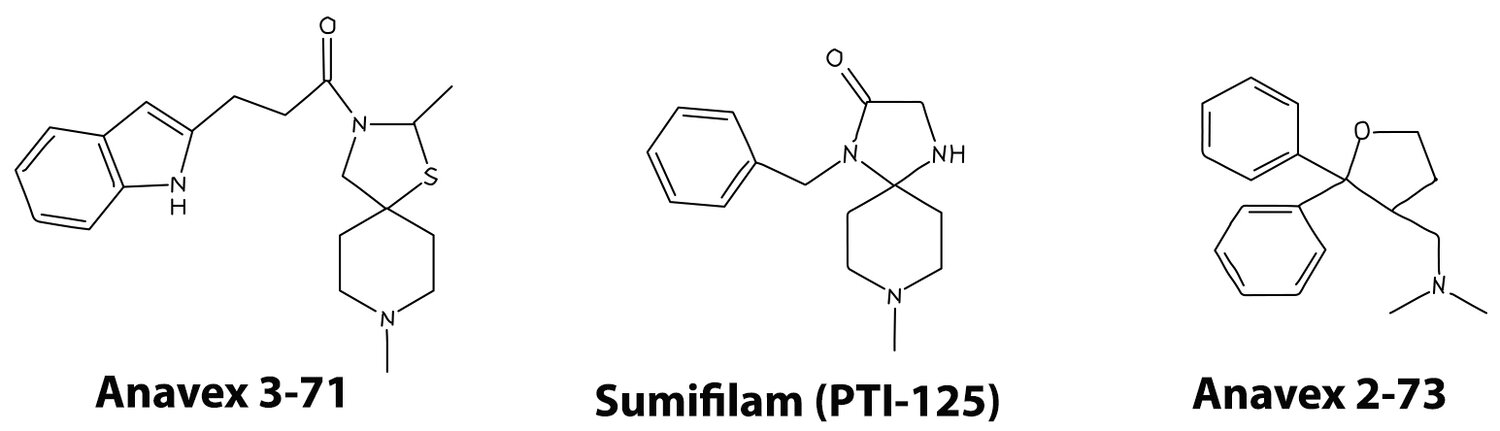
All roads lead to Rome: compounds from AVXL and SAVA likely target the same sets of molecules — Biotech Changes Lives
Cassava Sciences (SAVA) presented the phase 2b data on its lead drug, Sumifilam, from its re-analysis. The results look impressive from the view of biomarkers, although the new analysis is not blinded. Initial analysis by an independent company in a blinded fashion showed no effect from treatment.
Biotech Changes Lives (www.biotechtoinvest.com)
-
Anavex . Cantor CC 17. september.
https://www.webcaster4.com/Webcast/Page/2495/37416
Intet nyt og ingen ny præsentation.
CC var en virtuel webcast med CEOen og en god og garvet Cantor analytiker, der havde sat sig ind i casen og stillede relevante spørgsmål.
Der var størst fokus på RETT og de muligheder positive data kunne bevirke for RETT, men også for en række andre beslægtede sjældne indikationer.
CEOen understregede, at resultater fra alle lab. forsøg har kunnet eftervises i de første 6 RETT patienter. US RETT forsøget (31 patienter over 18 år ), som er afsluttet og ventes resultater fra inden for de næst par mdr. Pga. særstaus hos FDA forventede man ved positiv data en hurtig behandlingstid fra FDA og adgang til markedet. Ved lab. forsøgene så man stor effekt i både ældre og unge dyr, men forventede at man ved yngere individer vil får 10-20 % bedre respons.
Ved positive data i RETT var det oplagt, at brede 2-73 ud i de andre sjældne indikation, so de allerede har gode prekliniske data fra.RETT fase 2 ( 33 patienter + 18 år ) i AUS. forventes resultater fra sidst i 2020 eller start 2021.
RETT fase 2/3 forsøget ( 64 patienter 5-18 år ) i AUS og flere andre lande ventes afsluttet med resultater midt 2021.
Der var ikke meget snak om Alzheimer, kun at der udelukkende har været gode data og at man har udvidet med 21 sites i flere andre lande, for at fremskynde indrulningen.
CEOen bekræftede igen, at vi får data fra Parkinson fase 2 forsøget inden udgangen af september - dvs. om max 9 handelsdage!
Hvis han havde kendskab til, at data var dårlige, må han være en rigtig god skuespiller, for han gav udtryk for, at han virkelig så frem til resultaterne.
Til spørgsmål om evt. stærke data kunne være tilstækkelig for en ansøgning om markedesgodkendelse, svarede CEOen, at han hellere ville lade resultaterne tale for sig og herefter drøfte et videre forløb med f.eks. FDA. Men som udgangspunkt skal man normalt forventet et opfølgende fase 3 fosøg.
( Nok det som Shake It Up Foundation ønsker at betale 50 % af - så data må som minimum forventes at være tilstrækkelig gode til at man kan få lov til at starte et fase 3 forsøg )Cantor analytikeren virkede meget begejsteret for Anavex og deres tilgang og sagde, at han forventede at navnet Anavex snart ville dukke op på mange investores pc skærme!
Vi må bare afventet resultaterne de næste dage - men har forsat en god fornemelse efter dette webcast.
-
Tak for dit referat og update. Lyder jo alt i alt super.
-
Ja der lyder skam godt men der er ingen købere, volumen 250k indtil nu.
De helt store købere har ikke rigtig meldt sig på banen endnu men de kører nogle gange en strategi som der ikke er nem at blive klog på.
Hvis data er gode bliver raketten fyret af -
så er jeg med på en lille lotto kupon
-
Ladenburg starts Anavex with Buy rating, $12 price target Ladenburg Thalmann analyst Robert LeBoyer initiated coverage of Anavex navex Life Sciences with a Buy rating and $12 price target. The analyst expects the shares to be driven by Anavex's three Phase 2/3 clinical trials in Rett syndrome, the results from its Phase 2 Parkinson's disease trial, and milestones from its Alzheimer's disease trial. His revenue models are based only on the Rett syndrome indication for ANAVEX 2-73.
-
Anavex - Ny Analytiker fra Ladenburg Thalmann.
Rart Kyed01 med et par nye øjne på Anavex, men de 12 $ burde allerede kunne opnås ved evt. rigtig gode data fra Parkinson. Hvis vores kære CEO skulle overholde sin udmeldte tidsplan for første gang, skulle dette være senest den 30. september 2020 - max 3 handelsdage!!
I morgen tirsdag kl. 13 Dk-tid i premarkedet ville være fint! -
Ja kedlen er ved at komme i kog, ingen tvivl om det.
De kursmaal de forskellige analytikere sætter er normal ret konservative, kurs 100 er ikke umulig om 3 år hvis deres forsøg går igennem fase 3 med positive resultater på flere forskellige sygdomme.Jeg er også utroligt spændt på resultatet, har satset ret meget af min beskedne formue i dem.




Hello! It looks like you're interested in this conversation, but you don't have an account yet.
Getting fed up of having to scroll through the same posts each visit? When you register for an account, you'll always come back to exactly where you were before, and choose to be notified of new replies (either via email, or push notification). You'll also be able to save bookmarks and upvote posts to show your appreciation to other community members.
With your input, this post could be even better 💗
Tilmeld Log ind